 Workpiece
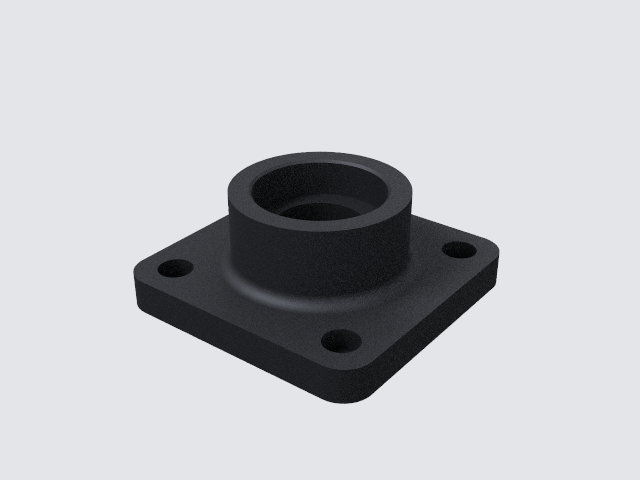
Flanged bearing housing
A turned hub on a square flange: a revolved profile dimensioned by diameters about its drawn axis, counterbored holes for M8 cap screws in a circular pattern, fillets and a section through the bore.
11 original parts and assemblies. Each is one Python script that builds the part and its ISO drawing sheets; nothing on a sheet was drawn by hand. Click a sheet to see it full size, or open the part in the web app, already built.
A turned hub on a square flange: a revolved profile dimensioned by diameters about its drawn axis, counterbored holes for M8 cap screws in a circular pattern, fillets and a section through the bore.
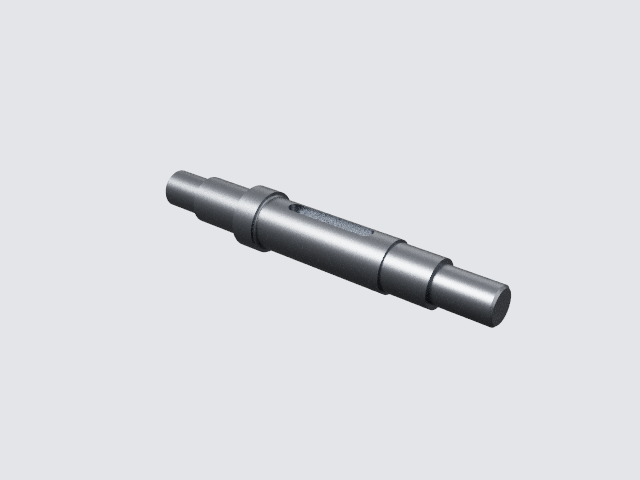
Six diameters on one revolved profile, chained lengths, an M16 cosmetic thread, a keyway cut down to a datum plane and shown in a section, chamfers and corner rounds; drawn at 2:1.
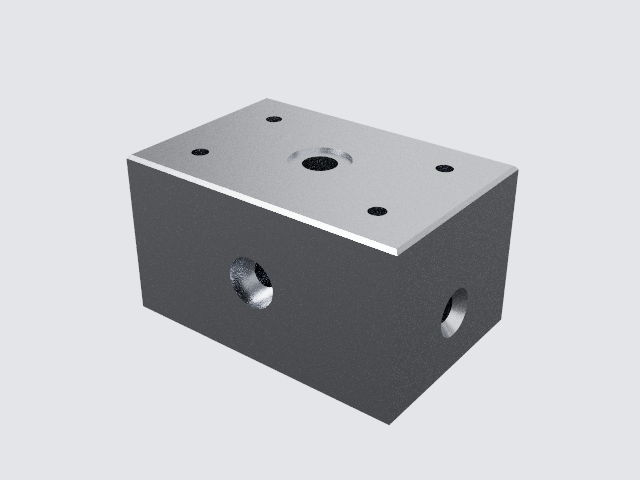
Drilled ports that meet inside an aluminium block: a spot-faced pressure port, a counterbored and a countersunk side port, four tapped M6 holes, and two sections that show the bores meet.
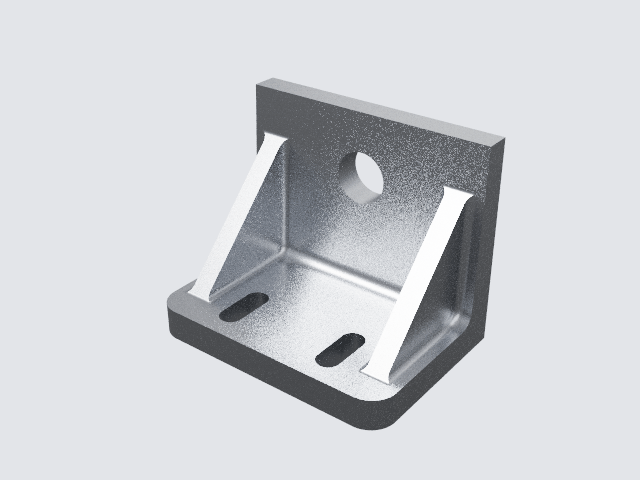
An L profile extruded both ways, a 2° casting draft, a rib and mounting slots each made once and mirrored, an H7 bore, and fillets on every inside corner.
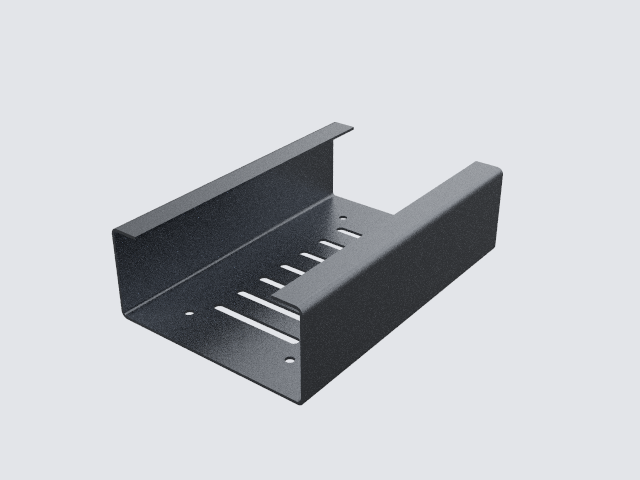
Driven by named values you can change on the command line: a base with flanges and inward lips bent along its edges, a row of vent slots, mounting holes, and its flat pattern on a sheet of its own.
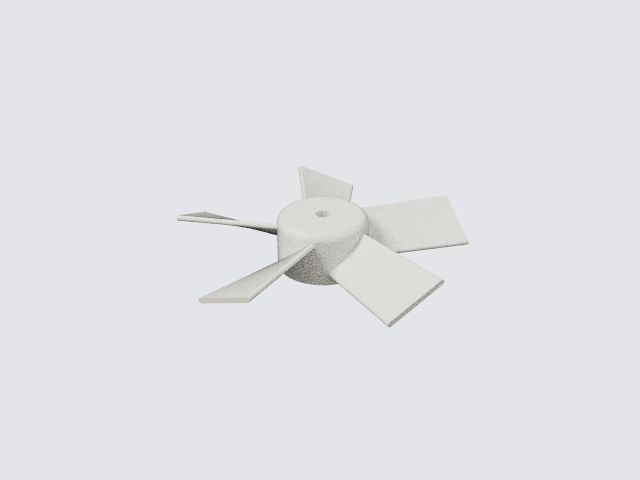
A turned hub and five twisted blades: one blade lofted from a root section to a tip section, each pitched at its own angle, and a circular feature pattern; a section shows the tip's pitch.
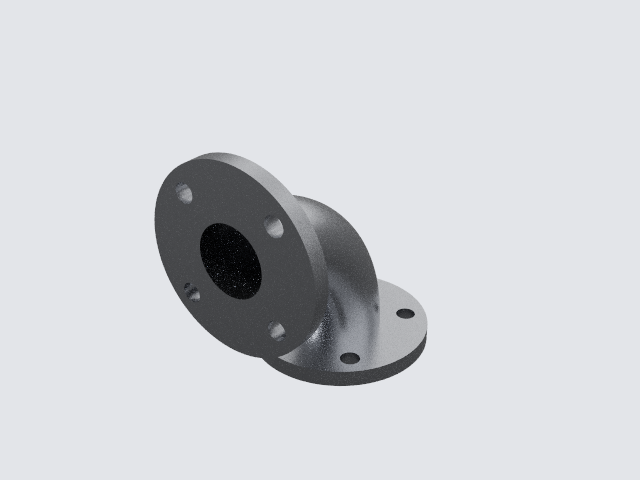
A tube swept along a bend, a flange with four bolt holes, and the flange with its holes mirrored onto the other end in the plane that halves the bend.
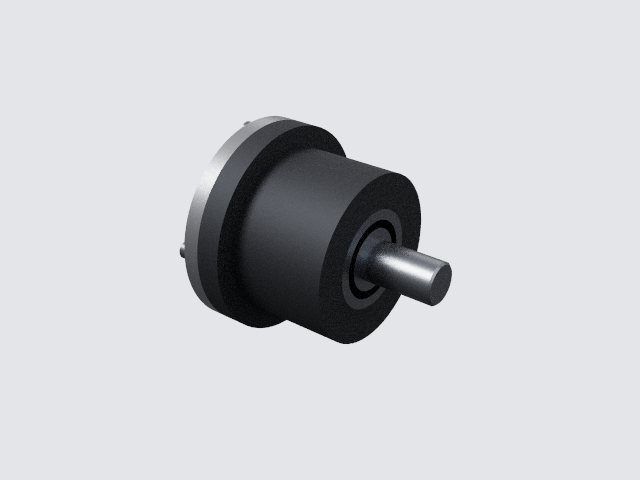
A housing, a shaft turning in two catalogue 6204 bearings, a cover held by four catalogue M5 cap screws: joints, a part pattern, a section through the axis, a parts list and balloons.
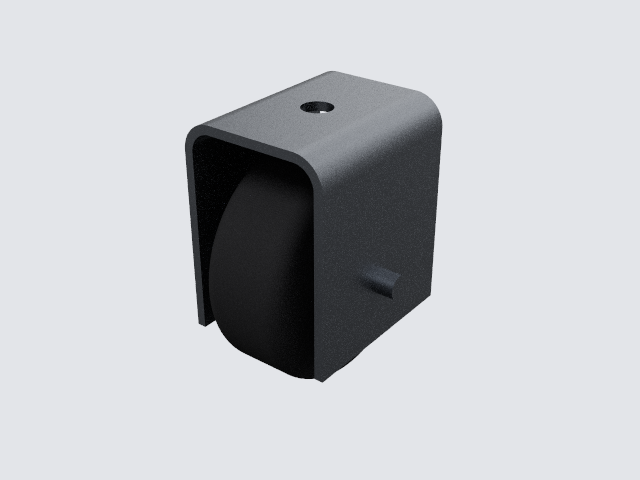
A shelled steel fork, a wheel of two bodies (aluminium hub, rubber tyre) each weighing by its own material, and an axle pin; the wheel turns on a revolute joint.
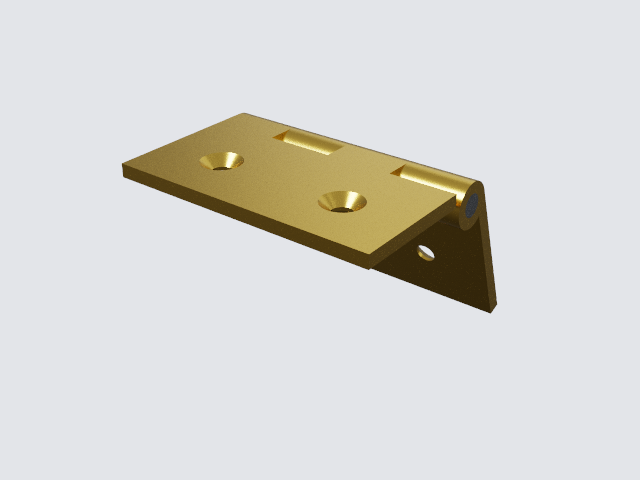
One brass leaf part placed twice, the second turned end for end so the knuckles interleave, a steel pin, and a revolute joint driven open to 110°; knuckles, reliefs and countersunk holes are each one feature and a pattern.
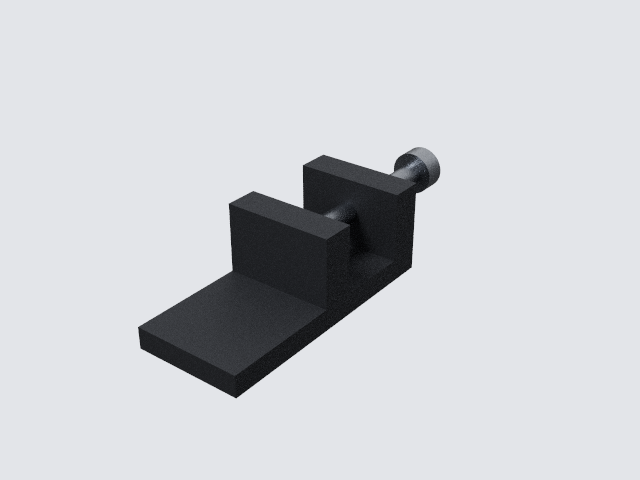
A cast body and moving jaw and an M12 screw: the jaw slides on the body, the screw turns in it, and a Drive step opens the vise to a width; built open and nearly shut, its section draws the screw whole.